
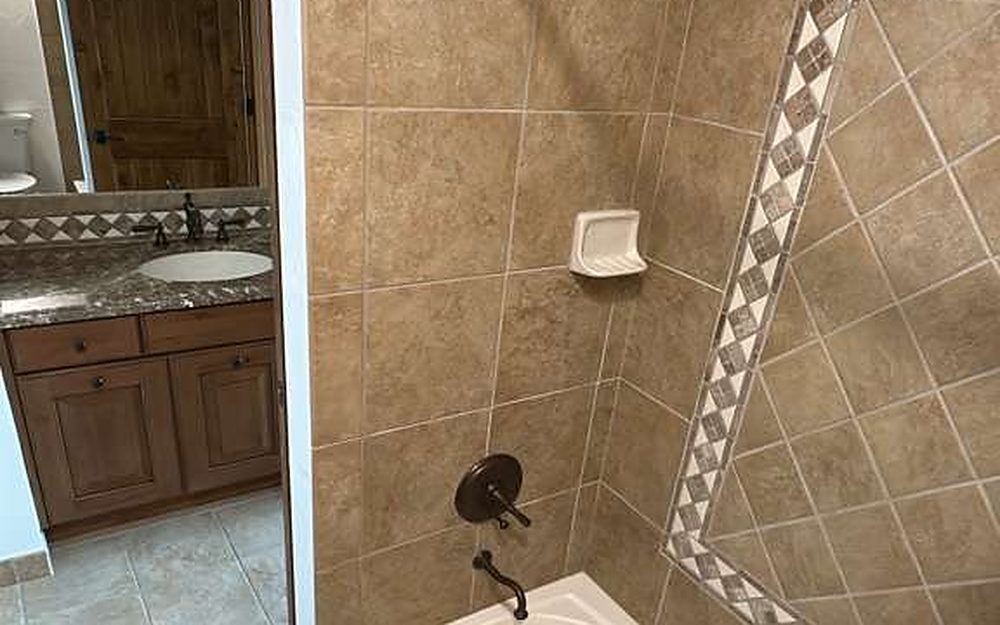
Nearly every quote request we receive asks some version of the same question: do I need the regular clean or the deep clean? It is a fair question and a slightly misleading one, because the two services are not alternatives. They are sequential. One removes what has built up; the other keeps it from building up again.
Picking the wrong one is not a disaster, but it does waste money. A standard visit booked for a home with a year of accumulation cannot finish, and everyone ends the day disappointed. A deep clean booked for a home already on a plan spends most of its hours on surfaces that were already clean. Knowing which is which takes about five minutes of honest assessment.
What a regular clean is designed to do
A regular or standard clean maintains a baseline. It assumes the home is already fundamentally clean and its job is to remove the last week or two of ordinary living: dust on flat surfaces, kitchen use, bathroom use, floor traffic, trash.
The sequence is fixed because it has to be. Dust falls, so we work from the top of the room downward. Water spreads, so dry work happens before wet work. Floors are last in every room, because anything else means walking across a finished floor. In a maintained three-bedroom home this takes a two-person team roughly three to four hours.
What it does not do is fight accumulation. A standard visit wipes a baseboard; it does not hand-clean every baseboard in the house. It cleans a shower; it does not brush every grout line in it. Those tasks exist in a different service for a reason: each of them is measured in hours, not minutes.
What a deep clean is designed to do
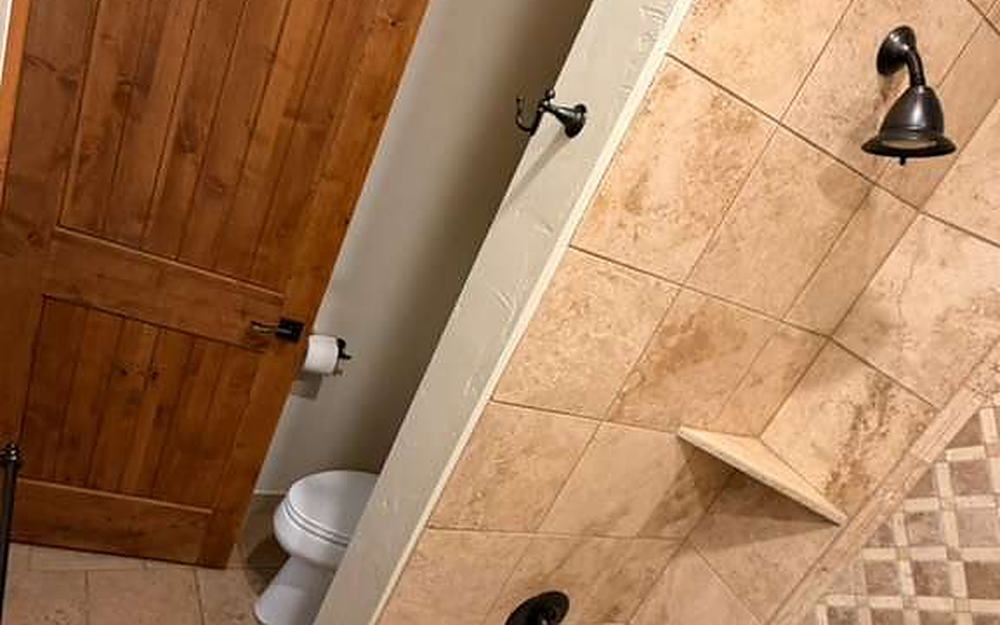
A deep clean eliminates accumulation. Most of its hours go into surfaces cleaned by hand, at close range, with a product that needs time to sit before it does anything at all. Grout lines. Window tracks. Faucet bases. Cabinet top edges. Hinges. Vent covers. Light fixtures. The seam where a counter meets a backsplash.
Chemistry drives it more than effort does. Soap scum and hard-water scale are mineral deposits and need an acidic cleaner with real dwell time. Kitchen grease needs the opposite — an alkaline degreaser, also with dwell time. Spraying either one and wiping immediately is the most common mistake in home cleaning, and it accomplishes very little beyond redistributing the problem.
That is why a deep clean cannot be rushed into a standard slot. The products need to sit while the crew works elsewhere and comes back. Compressing the visit removes the dwell time, and without dwell time you are just scrubbing harder for a worse result.
The time difference is the real difference
The clearest way to compare the two is by hours, not by task lists. A home that takes three to four hours to maintain generally takes eight to eleven hours of combined crew time to deep clean. Same house, same rooms, two to three times the labor.
- A standard visit: every room cleaned to baseline, floors finished, kitchen and bathrooms reset.
- A deep clean: everything above, plus grout, tracks, baseboards by hand, vents, fixtures, hinges, cabinet edges and appliance detail.
- A deep clean commonly runs a full day with two cleaners; a standard visit is a morning.
That ratio is also why per-visit pricing differs so much between one-time and recurring work. Recurring visits are cheaper because a maintained home genuinely takes less time — not because of a loyalty discount.
How to tell which one your home needs
Skip the square footage and check five specific places. They are where accumulation shows up first and where it is impossible to argue with what you see.
- Shower glass, viewed at an angle in daylight. Cloudy film means mineral build-up that a standard visit will not remove.
- The window track in the room you use most. Grit and dark residue mean nobody has been in there in a long time.
- The top edge of a kitchen cabinet door, felt with a fingertip. Sticky means grease film across the whole kitchen.
- Grout in the main bathroom. Darker in the corners than in the middle means it needs brushing, not mopping.
- The baseboard behind the bathroom door. If it has a visible line of dust, so does every other baseboard in the house.
Two or more of those pointing the wrong way means start with a deep clean. All five clear means a standard visit will do exactly what you want.
Why the order matters more than the choice
The sequence that works is deep clean once, then maintenance. The sequence that disappoints is maintenance first, hoping it will gradually catch up. It will not, and the reason is arithmetic: a standard visit has a fixed number of hours, and those hours are already allocated to the core rooms.
If a home needs eight hours of hand detail, adding thirty minutes of it to each of the next sixteen visits means eight months before the house looks the way you were hoping it would look the first time. Meanwhile you are paying full price for every one of those visits.
Doing it in the other order means the second visit onward is genuinely maintenance, and it holds. That is the single most useful thing to understand about buying cleaning services.
What this looks like over a year
For most homes around Wyoming, the pattern that works is one deep clean to reset, then biweekly maintenance with a rotating detail task on each visit — baseboards one time, interior window glass the next, then cabinet fronts, then vents and fixtures.
Handled that way, the deeper work never accumulates again and a second full deep clean is usually unnecessary. Without a rotation, plan on roughly one deep clean a year, or sooner after anything that generates fine dust: sanding, remodeling, new flooring, or a long winter of salt and forced-air heat.
If you are not sure which category your home falls into, send photos of a bathroom, the kitchen and one window track. Condition decides this, not square footage, and photos settle it in a minute.